
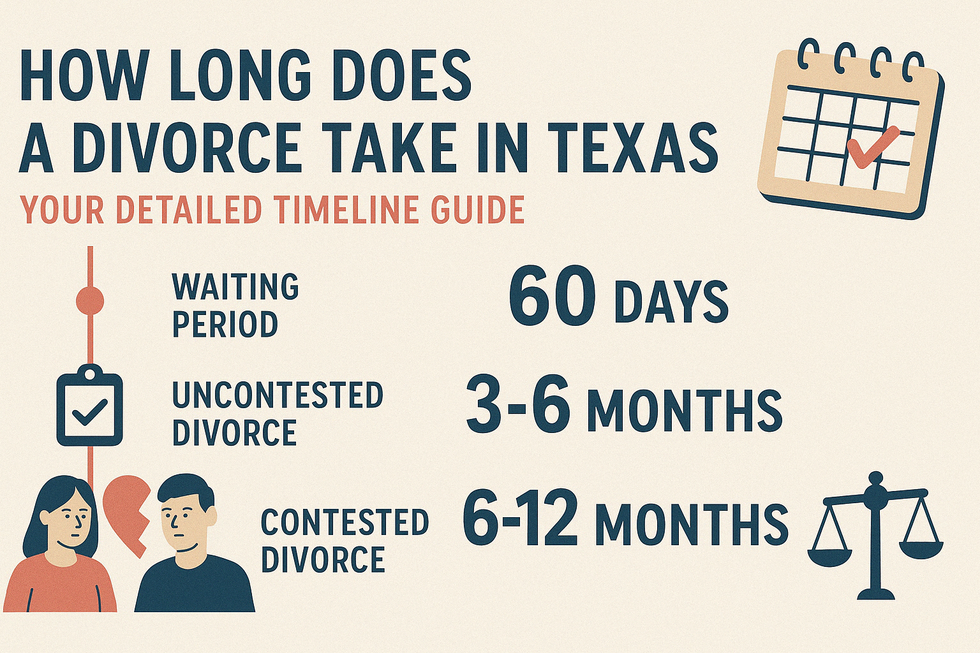
How long does a divorce take in Texas? The minimum is 61 days, but it can take longer depending on various factors. This guide breaks down what affects the timeline of a Texas divorce. If you're navigating the timelines of a divorce, reach out to a Houston divorce attorney at The Law Office of Jimoh PC by calling (713) 271-8484 or book an appointment here.
Key Takeaways
-
In Texas, there is a mandatory 60-day waiting period after filing for divorce, with the minimum time to finalize a divorce being 61 days, unless exceptions apply, such as cases of family violence.
-
Uncontested divorces can be resolved more quickly, typically within 3 to 4 months, provided both parties agree on key issues, whereas contested divorces often take significantly longer due to unresolved disputes.
-
Proper documentation and the use of mediation can streamline the divorce process, minimizing delays, reducing costs, and expediting resolutions through cooperative negotiations.
Understanding the Texas Divorce Waiting Period

In Texas, divorce proceedings follow specific timelines to ensure both parties have adequate time to consider their decisions. One critical aspect is the mandatory 60-day waiting period after filing a divorce petition. This non-negotiable period serves as a cooling-off phase, allowing spouses time to reflect on their decision and preventing hasty finalizations by a judge.
Exceptions to this rule exist. In most cases of family violence, the mandatory waiting period can be waived to expedite the process, emphasizing the importance of safety and swift resolution in such situations.
Thus, the minimum time to finalize a divorce in Texas is 61 days, considering this mandatory period.
Factors Influencing Divorce Timelines
The nature of the divorce significantly impacts the duration of the process. An uncontested divorce, where both parties agree on all terms, can be resolved in as little as 80 days, depending on the county's processing times. Conversely, a contested divorce with unresolved issues can drag on much longer.
Several factors can extend the divorce timeline. Child custody and support issues are often the most contentious, as courts prioritize the child's best interests. Complex financial situations, including the division of assets and debts, add layers of complexity and delay. Additionally, heavy court caseloads can slow down the scheduling of hearings.
Special cases like military divorces introduce unique challenges. The Servicemembers Civil Relief Act allows military personnel to delay proceedings if their service affects their ability to participate in a specific situation. Child custody arrangements must consider deployments and other service-related factors, and the division of benefits like pensions must align with state and federal regulations. These nuances can add time to the overall process, which is often served with additional complexities.
Uncontested Divorces: A Faster Path

For a quicker resolution, an uncontested divorce is often the best route. In the Texas divorce process, it typically takes about 3 to 4 months to finalize. To qualify, both parties must agree on the reason for the divorce, have no minor children, and have already agreed on property distribution and spousal maintenance. This mutual agreement significantly reduces the time spent in legal proceedings.
The benefits of an uncontested divorce are manifold. It saves time, reduces stress, and minimizes legal expenses associated with drawn-out court battles. Spouses can move on with their lives more quickly and with less financial strain by reaching an uncontested agreement.
Contested Divorces: Why They Take Longer

Contested divorces often take longer due to unresolved issues between the parties. Child custody disputes are particularly time-consuming, requiring additional legal representation and expert evaluations to ensure the child's best interests are met. Similarly, disagreements over property division often necessitate costly expert evaluations to ensure fair distribution.
These contentious issues significantly extend the timelines of contested divorces for those who are divorced. Each unresolved matter requires thorough examination and negotiation, adding complexity and time to the process.
Special Circumstances Affecting Duration
Certain special circumstances can affect the duration of the divorce process. For instance, if a judge orders mediation, attendance is mandatory unless there are valid safety concerns due to family violence. In such cases, mediation can be conducted in separate rooms to prevent direct contact between the parties, ensuring safety while still facilitating dispute resolution.
Mediation is an important tool in the mediation process of divorce proceedings, especially in cases involving domestic violence. It resolves disputes while maintaining the safety of the affected spouse, ensuring the process is as safe and efficient as possible under challenging circumstances.
The Role of Mediation in Speeding Up the Process
Mediation can expedite the divorce process. By promoting cooperative negotiations, it helps resolve disputes with the assistance of a neutral third party, without prolonged court battles, speeding up the process and reducing the adversarial nature of divorce proceedings.
Mediation is generally more affordable than going to court, with fees ranging from $200 to $500 per hour and total costs between $3,000 and $8,000, often significantly lower than a full-blown court battle. Once both parties agree and sign the mediated settlement agreement, it becomes binding, providing a clear and enforceable resolution.
If mediation is successful, an uncontested divorce can often be completed entirely online, saving time and reducing the need for in-person legal consultations. This convenience is particularly beneficial in today's digital age, streamlining the entire divorce process.
Essential Documentation for a Smooth Process
Proper documentation is crucial for a smooth divorce process. Preparing all necessary divorce papers before meeting with a divorce attorney can enhance the effectiveness of the consultation and expedite the legal process. Key documents include financial statements, property deeds, separate property, and any agreements already made between the spouses. A well-organized document can also facilitate communication between all parties involved.
Having all this information involved finalized ensures a more streamlined and efficient mail process.
Court Hearings and Finalizing the Divorce Decree

Finalizing a divorce requires a court hearing where the judge reviews the spouses' requests before signing the divorce decree. The judge evaluates the terms spouse agree upon by both parties to ensure they are fair and meet legal standards, ensuring that all legal requirements are met and that the agreement is just and equitable.
In uncontested divorces, this process is often simplified through a ‘prove-up' hearing. This brief session involves presenting evidence and testimony regarding the divorce terms, making it a quicker and less stressful experience. The judge's review and approval of the presented terms are essential for issuing the final divorce decree.
Costs and Financial Considerations
Divorce in Texas involves several costs that can significantly impact your financial situation. Initial court filing fees typically range from $250 to $350, depending on the county. Attorney fees can vary widely, with straightforward uncontested divorces costing a few thousand dollars, while contested divorces may exceed $20,000. Being aware of these costs and planning your budget accordingly is crucial.
Understanding the financial implications of divorce is crucial for managing your resources effectively. Planning ahead and being mindful of potential expenses helps navigate the financial aspects of divorce more smoothly.
Tips to Minimize Delays
Maintaining accurate documentation of all communications and filings is vital to minimizing delays in the divorce process. This practice helps identify and combat potential delays. Requesting temporary court orders can address pressing issues while awaiting the final filing for divorce resolution, preventing stalling.
Filing a motion to compel can prompt a non-compliant spouse to provide necessary information or documents. Virtual legal consultations also offer a stress-free way to seek assistance and keep the process moving smoothly.

Seeking Legal Advice
Navigating the complexities of a divorce process can be overwhelming, making legal representation essential. Consulting a divorce lawyer provides sound legal guidance tailored to your circumstances. Initial consultations with divorce attorneys help assess compatibility, ethics, and strategy before committing to legal representation.
Choosing an attorney who aligns with your values and communication style is crucial for a productive attorney-client relationship during a divorce. For those with limited financial resources, various organizations offer legal aid to meet their legal needs. Texas RioGrande Legal Aid, the Dallas Volunteer Attorney Program, and the Houston Volunteer Lawyers Program are just a few examples of law resources available to low-income residents.
The Texas Legal Services Center and the Earl Carl Institute at Texas Southern University also provide free legal representation to qualified low-income residents, particularly in rural areas. Utilizing these resources can greatly ease the challenges faced during divorce proceedings under texas law, especially regarding community property.
External Resources for Support
External resources can provide invaluable support during the divorce process. Military families have access to specialized programs offering legal and financial assistance, including medical support. For information about child support in Texas, the Texas Attorney General's website is a useful resource.
Utilizing legal aid and support services can significantly ease the burdens of divorce. These resources offer guidance and assistance, helping individuals navigate the complexities of the divorce process and the laws more effectively.
Contact Our Houston Divorce Law Firm Today
If you're considering a divorce, contact a Houston divorce attorney at The Law Office of Jimoh PC at (713) 271-8484 or schedule a time here.
Our experienced team of divorce attorneys is here to assist you with professionalism and care in your family law matters. We understand the complexities of navigating divorce timelines in Texas and can provide tailored guidance to ensure a smoother process. Our family law attorneys are ready to help with your family law matter. Don't hesitate to schedule your free initial consultation today.
Summary
In summary, understanding the Texas divorce process, from the mandatory waiting period to the factors influencing timelines, is crucial for navigating this challenging journey. Uncontested divorces offer a faster path, while contested ones require more time due to unresolved issues. Special circumstances, such as family violence and military service, can also impact the duration. Mediation plays a vital role in speeding up the process, and proper documentation is essential for a smooth journey.
By seeking legal advice and utilizing available resources, you can manage the process more effectively. Moving forward, remember that while divorce is a difficult experience, it is also an opportunity for a new beginning. With the right guidance and support, you can navigate this challenging phase and emerge stronger.
Frequently Asked Questions
How long does it take to finalize an uncontested divorce in Texas?
An uncontested divorce in Texas typically takes about 3 to 4 months to finalize. This timeframe allows for the necessary legal processes to be completed efficiently.
Can the mandatory 60-day waiting period be waived?
Yes, the mandatory 60-day waiting period can be waived in instances of family violence.
What factors can prolong the divorce process?
Child custody disputes, complex financial matters, and court backlogs can all significantly extend the duration of the divorce process. Addressing these issues proactively can help streamline proceedings.
How can mediation help speed up the divorce process?
Mediation facilitates cooperative negotiations, effectively minimizing prolonged court battles and accelerating the divorce process. As a result, it fosters a more efficient resolution for both parties involved.
What are the typical costs involved in a Texas divorce?
The typical costs for a Texas divorce include court filing fees of $250 to $350 and attorney fees that can rise significantly for contested cases, potentially exceeding $20,000. It is crucial to budget accordingly for these expenses.
Comments
There are no comments for this post. Be the first and Add your Comment below.
Leave a Comment